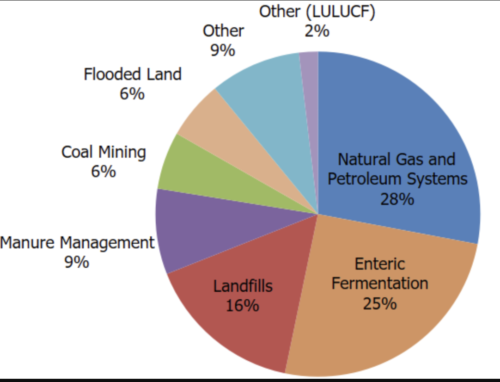
Two climate solutions – plants-rich diet and reduced food waste – are Nos 3 and 4 on Project Drawdown’s most effective existing solutions to climate change. And they’re the two that offer the most individual agency for students, faculty, staff, and administration at PPS. Read more here. An earlier version of the methane pie chart from EPA offers softer numbers, but offers reason enough to act. Enteric fermentation (25%) is from cow burps, mostly; add to that manure management (9%), and then, landfills, at 16%, and the food we choose to eat and how what we do with uneaten/discarded food and organic matter adds up to a full 50%. Shannon Barlow, food systems literacy coordinator, while at Rutgers, worked with the Rutgers Cooperative Extension Food Waste Team. “This team/project is an ongoing effort to reduce food waste in homes and more specifically in schools,” she says. “The team helps to go into schools and conduct food waste audits, set up share tables in a safe way, and introduce the administration, staff, and students to properly disposing of food waste in easily identifiable buckets.”