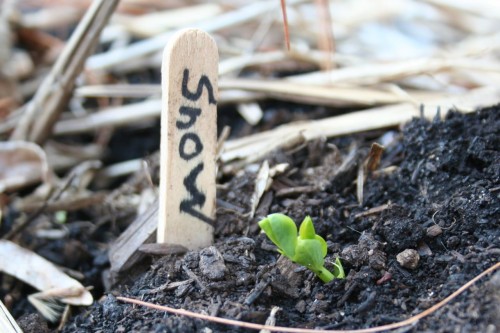
Growing season begins

PSGC began its work on food systems literacy by funding, establishing and maintaining Edible Gardens at all six schools in the Princeton Public Schools district. Our next step was to fund Edible Gardens stewards/instructors to make each garden unique to its students and to foster curricular connections and to connect children to the natural systems that support all life.
Select a school from the drop-down menu to see edible garden activity there.
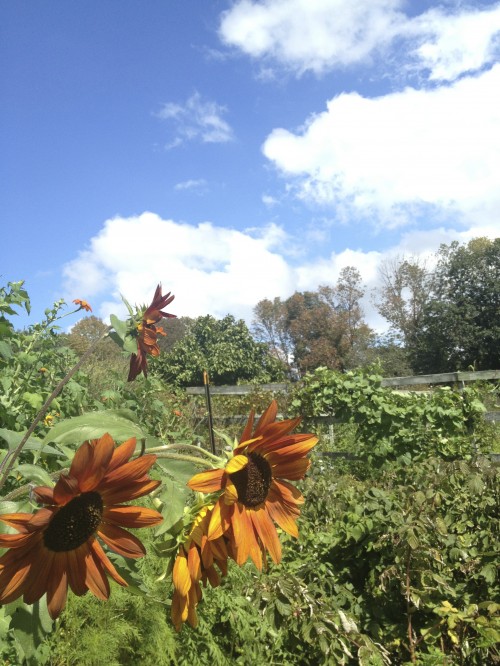
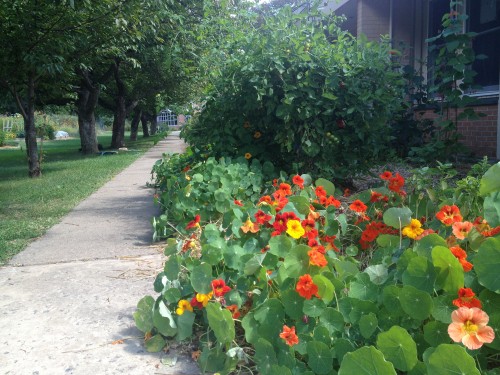
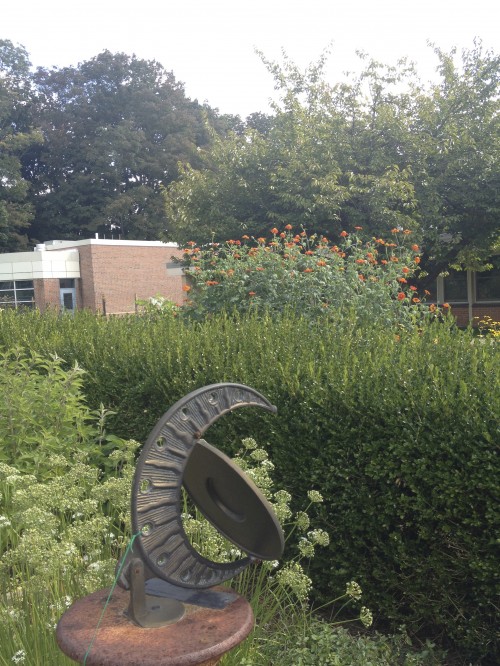
From the link.
“First grade harvested a lot of vegetables from our garden. They then made vegetable soup. We studied the important role of in our garden and went on a bug hunt, looking for both beneficial and not-so-beneficial insects!”
Johnson Park Edible Gardens are safely tucked within a courtyard, safe from deer. Restoration of the garden beds is under way. Email Anna Rose Gable, our PSGC Edible Gardens coordinator, to volunteer, or to be connected with the JP Edible Gardens steward/educator.
Things are growing at Littlebrook – check this link to see what’s new!
By Assenka Oksiloff
Princeton Public Schools
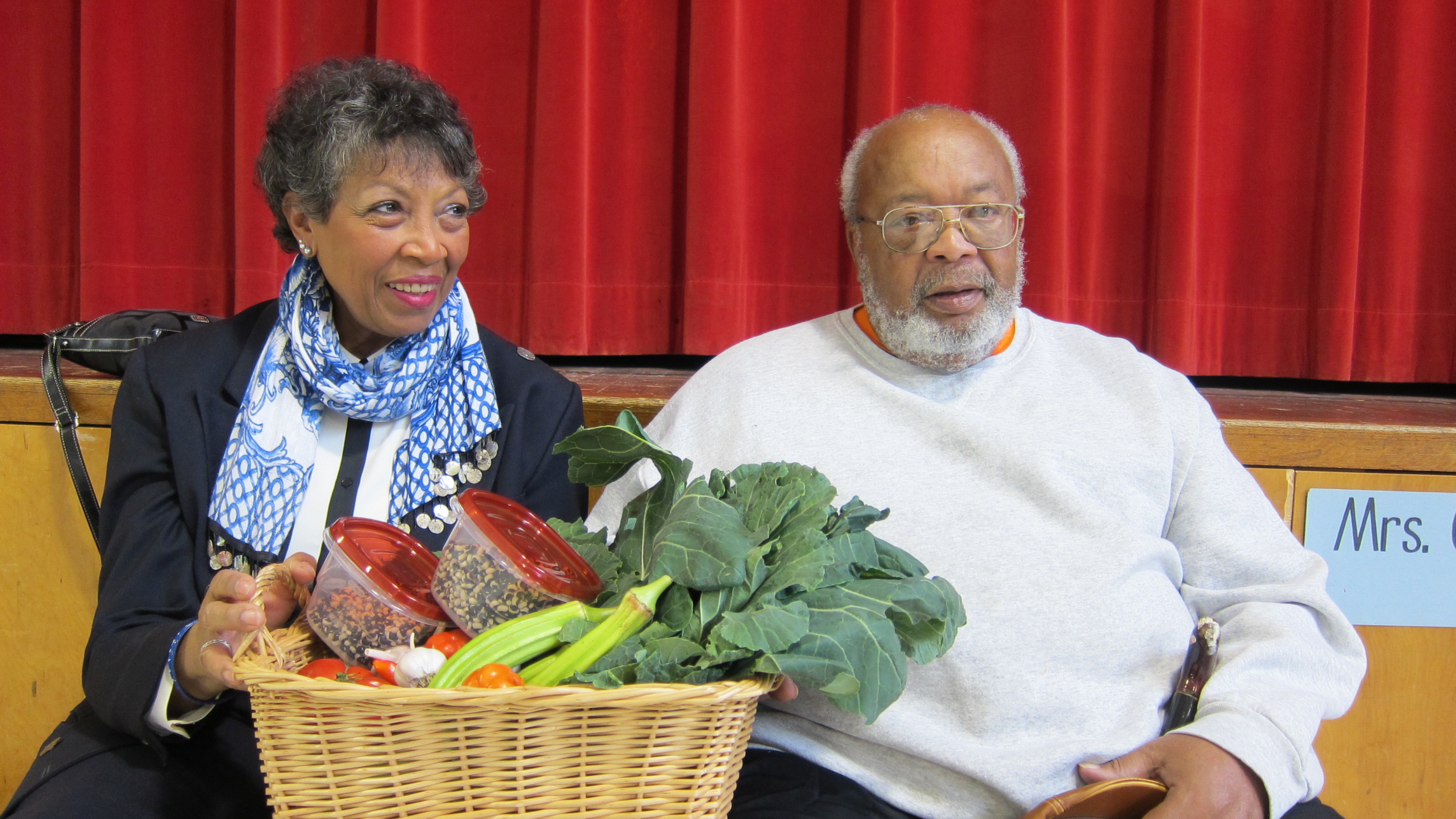
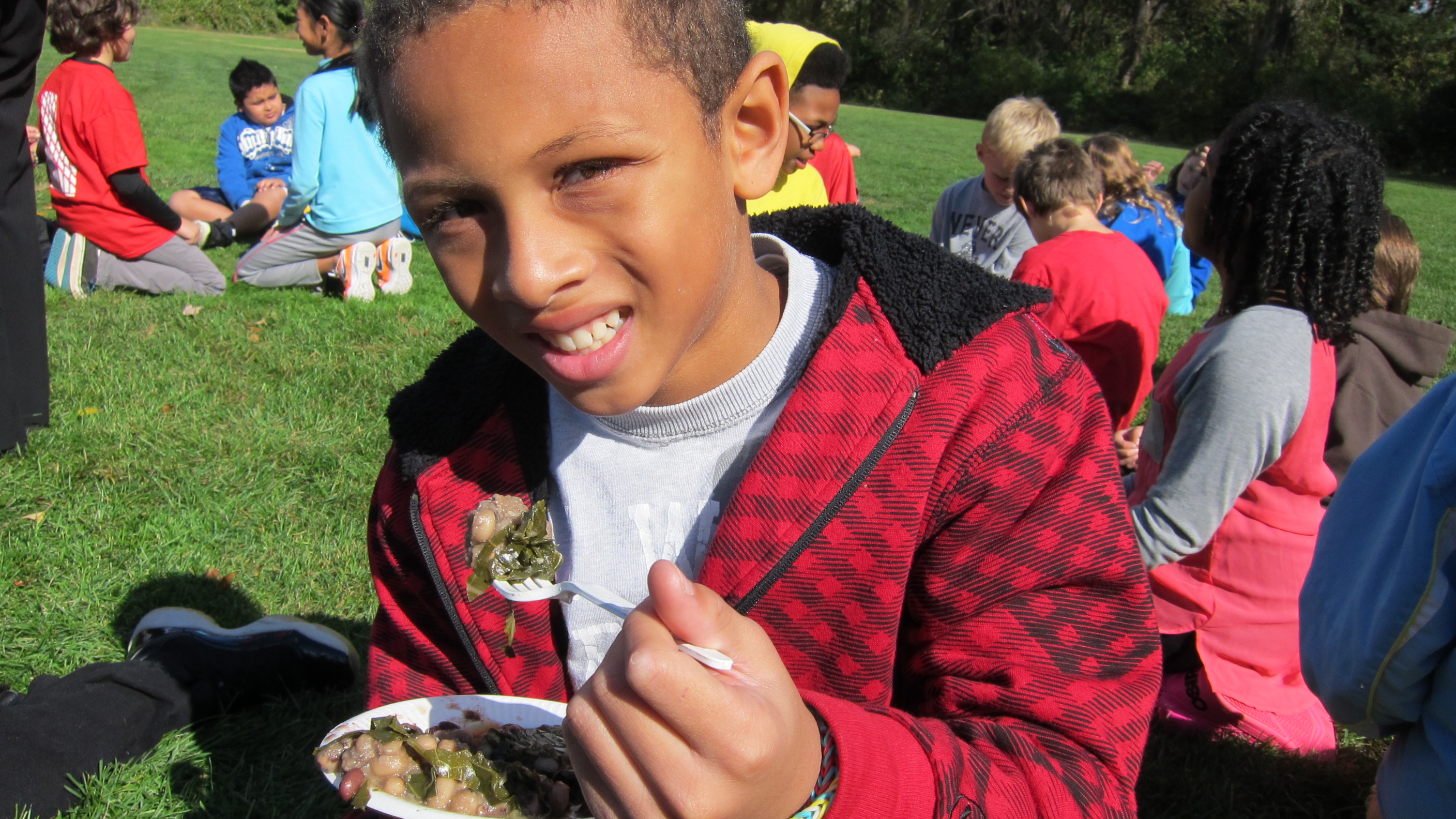
As part of Food Day celebrations this week, students at Littlebrook Elementary reaped the bounty of their harvest and also got a lesson from guest speakers Shirley Satterfield and Henry Pannell about the origins of soul food. Satterfield and Pannell, long-time educators and members of the Princeton community, talked about the recipes and taste of soul food – and its history and cultural context.
With the help of Garden Educator Priscilla Hayes, this year’s Littlebrook fifth graders are growing a Freedom Garden, which consists of crops that once were grown by slaves from Africa. The plants harvested this year include okra, cowpeas, collard greens and fish peppers.
Satterfield, a former board member and currently an advisor of the Historical Society of Princeton, knows a lot about the connection between food, culture and social struggles: She has lived it.As a child growing up in Princeton, she was among the first pupils from the Witherspoon School for the Colored, which closed in 1948, to integrate with Nassau School under the Princeton Plan. While attending college in North Carolina, she joined the Greensboro Four at the Woolworth’s lunch counter to protest segregation.
It was in the South that Satterfield grew to love soul food. Pannell, whose family hails from Virginia, grew up with collard greens and kale in the garden, still two of his favorite foods, which he continues to grow in his own garden. Satterfield gets her kale from her share in a local organic farm, and she told the children that she now eats the leafy green in a salad as often as she eats it in soul food dishes.
As part of the lesson for Food Day, Satterfield and Pannell took the children’s Freedom Garden produce to local chefs William Fowler and Edward Rice to prepare traditional African-American dishes for the students to sample. All of this was arranged with the help of Peter Young, Jr., a local entrepreneur, whose projects include a catering business with an emphasis on soul food. For the kids, it was a way of getting a deeper understanding of why food matters.
“When people ask us why we have a garden program, the quickest answer is always that it helps kids learn where food comes from,” said Amy Mayer, a member of the Princeton School Gardens Cooperative and sponsor of food- and garden-related events in the schools and the community. “That means, of course, understanding how plants turn sunlight and soil into fuel for our bodies. But that isn’t all. The foods we eat also, in a sense, come from our friends and families, our communities, our cultures, and our history.”
During the summer months, parents with children at Johnson Park volunteered their time in the garden to help water and tend plants. This enabled the students on their return to jump straight into garden activities, harvesting, cooking and tasting the produce they planted before their summer break. It is interesting and fun sometimes to taste what a vegetable is like before it is cooked and in my opinion when organically grown it tastes even better, especially when freshly picked. During September, students were busy making dishes such as salsa for the Johnson Park picnic event and at this event parents had the opportunity to sample the garden produce.
The Boy Scouts built a second compost for JP; students learned the process of decomposing vegetation and the value it brings to the vegetable soil beds when ready. There is a big oak tree in the garden so plenty of leaves to rake and deposit, as well as left over vegetable plants to start the composting process. The acorns from the oak tree were also collected and students planted them in the hope they will sprout in time for Arbor Day, April 26, and have grown sufficiently enough to take home and plant.
In October, kindergarten and first grade enjoyed various activities with pumpkins as well as tasting pumpkin seeds baked in olive oil. Second grade learned all about the Black Swallowtail Butterfly. They made soup from the host plants used by this native insect. Third grade had the opportunity to gather herbs and tie them using a slip-knot. The students took them home to hang and dry for later use in their home cooking. Fourth grade experimented with vegetables and berries as a natural dye. Fourth grade also had the chance to make a delicious soup called Three Sisters, consisting of squash and beans. Fifth grade made pumpkin muffins.
November really saw the end of most of the garden produce, the season finished with most grades planting spring bulbs and scattering seeds, the vegetable beds were prepared for the following spring. Tools and equipment were cleaned and safely stored.
Littlebrook Elementary School celebrated Food Day, Oct. 21, with a garden feast made with produce from the children’s edible gardens on campus. The menu included rosemary scones, beets and beet greens and home-grown popcorn. Festivities drew the attention of a reporter from the Princeton Packet, and netted a front-page story. story.
First Lady Michelle Obama, champion of good food, edible gardens and invigorating exercise regimens, was served produce from Littlebrook and Riverside school gardens at a lunch she attended last Sunday to raise funds for the re-election campaign of President Barack Obama.
Max Hansen, whose eponymously named catering company of Pipersville, PA, provided the meal, said that guests were served cherry tomatoes and basil from Riverside Elementary School gardens along with Comeback Farm (Hunterdon County, NJ) heirloom tomatoes in a salad of Blue Moon Acres (Pennington, NJ and Buckingham, PA) baby greens. For dessert, Mr. Hansen served Gab Carbone’s Bent Spoon cupcakes slathered with a choice of three buttercream frostings infused with herbs from the Littlebrook Elementary school garden: lavender, lemon balm and chocolate mint. He said that he was able to mention to the First Lady that the herbs were picked from Princeton School Gardens.
The lunch was served in the back gardens of Andy and Carol Golden’s home, overlooking a valley behind North Snowden Lane, near Herrontown Road.
By Assenka Oksiloff
Princeton Regional Schools
Research shows that children’s literacy skills improve when their reading and writing experiences are meaningful to them. At PRS, educators have taken this lesson to heart, designing innovative lessons and programs that make the written word come alive in imaginative – and delicious – ways.
In Jennifer Bazin’s kindergarten class at Riverside Elementary School, 17 students were recently treated to a culinary sampling while reading Maurice Sendak’s classic, “Chicken Soup with Rice,” in a lesson co-taught by Dorothy Mullen, the school’s garden artist-in-residence.
The lesson is part of a winter series on literature and food that Ms. Mullen has designed for the classes of Ms. Bazin and Linda Bruschi, who also teaches kindergarten at Riverside. Using an interactive, inter-disciplinary approach, Mullen packed the lesson full of goodies that included a reading of Sendak’s book, a review of the months of the year and the seasonal cycles, a song, and, of course, the pièce de resistance: chicken soup with rice.
Ms. Mullen’s position is funded by the Riverside PTO, who sought to develop a garden-based education program across all grades. Under her direction, in collaboration with the teachers, the children do garden lessons about 10 – 12 times per year.
During the winter months, they engage in lessons involving literature and food. This year, the kindergarteners have also tasted Stone Soup, Tops and Bottoms Soup, and Black Swallowtail Butterfly Host Plant Soup. “This is a way of bringing the garden into the classroom when we can’t go outside,” Mullen explained.
Before eating the soup, the students took a careful inventory of the ingredients in Sendak’s soup: chicken, rice, broth, carrots, celery and cabbage. They also pledge to honor Mullen’s simple rule: “You don’t have to eat something you don’t like, but no ‘yuck.’
In this case, there was no need for the rule. The soup received an overwhelming thumbs-up, with many requests for seconds. After the tasting, the group discussed plant growth and made plans for spring planting.
For Mullen, the connections between learning, gardening and eating add a nutritional and environmental component to the lesson. “We get our ingredients from our school, which gives a sense of sustainable living,” said Ms. Mullen, who is a founding member of the Princeton School Gardens Cooperative and has taught Master Gardeners of Mercer County how to become school gardeners. “Kids are actively involved when growing peas and carrots, and they are more likely to eat those vegetables when they grow them.”
Based on the data gathered about food preferences at the end of the lesson — almost all enjoyed the carrots, and two-thirds found the celery and cabbage delicious — she is correct.