
Folks at NJDA invite all to peruse the new website and to like the NJDA Farm to School Facebook page! Check both spots for timely statewide and national information. Thank you, Beth Feehan and Chris Cirkus – this work through the years would be tough without you two!
Garden State on Your Plate tastings
Our farm-to-school palate development program, Garden State on Your Plate, began in 2010 with a grant from Robert Wood Johnson Foundation. That pilot, designed to bring chefs and farmers into school cafeterias during lunchtime where they served up sample sizes of simple recipes using seasonal and local produce, now is produced in all four elementary schools. It has engaged Food Science students at the middle school, and, during the pandemic, also has reached the high school as a pilot showcasing local oats, local honey, local maple syrup and local fruit. Click through to use our colorful and informational posters to create farm-to-school tastings at your school: https://www.psgcoop.org/garden-state-on-your-plate-a-taste-of-place/
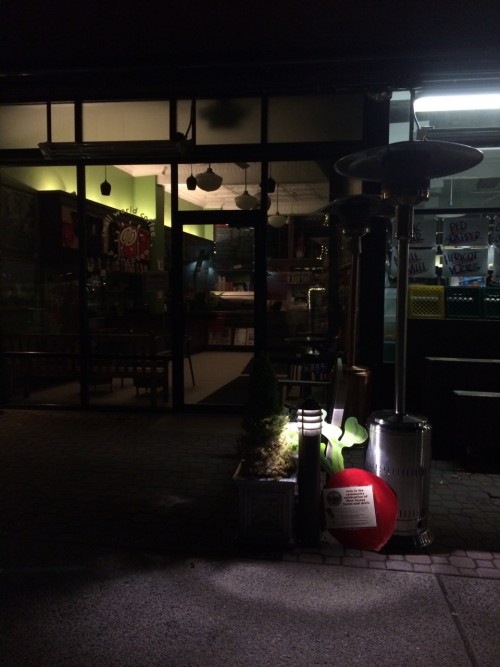
GSOYP: Radishes all over town
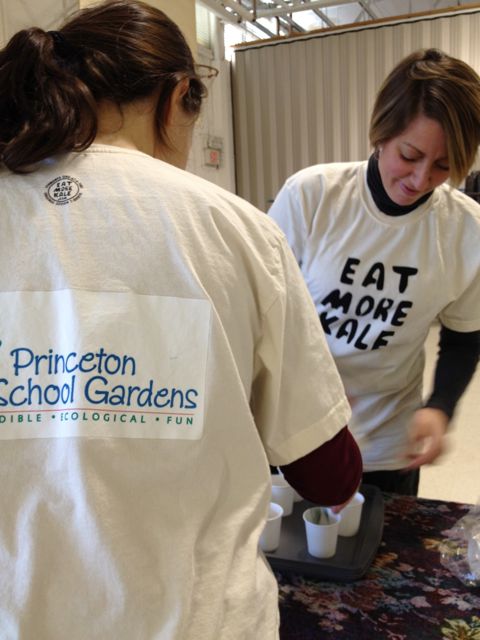
Littlebrook kids agree with chef: kale rules
By Assenka Oksiloff
Princeton Regional Schools
Fresh kale with salt and/or lemon, kale chips, kale soup – students at Littlebrook Elementary School sampled some ways to enjoy this earthy-tasting green in the latest series of tastings of the Garden State on Your Plate program.
The event featured recipes of Christopher Albrecht, executive chef of Eno Terra, in Kingston. For Annie Kosek, principal at Littlebrook, it was a way of using positive peer pressure in the opening of young minds – and whetting young appetites – in the discovery of new things. “We have a culturally diverse student body,” she said. “The children are used to seeing each other eat different things. The more they taste, the more they say, ‘this is good!’”
And that is exactly what occurred. Some of the most stalwart of skeptics were won over (in the words of one young taste tester: “The soup looks disgusting, but it actually tastes good”).
Jayme Feldman, a parent volunteer at the event, greeted the reactions with enthusiasm. “Any chance my daughter will try something new, I want to encourage it,” she said.
The tasting also allowed students to learn more about the foods they eat. Chris Turse, farmer at Double Brook Farm in Hopewell, who donated produce for the event, was there to answer questions. For him, the activity is a melding of two favorite pastimes. “I love growing plants, and I love teaching kids,” he said.
The adults learned too. Feldman, who said she had posted spies to observe what was accepted by the students, was eager to try the chef’s recipes at home (see the post directly below for his recipe for Tuscan Kale, Potato and Leek soup).
The Garden State on Your Plate program is funded by a grant from the Robert Wood Johnson Foundation.
Kale tasting at Community Park Elementary School
Community Park Elementary School parents are invited to join their children for a lunchtime tasting on Tuesday, March 6, when Christopher Albrecht, executive chef at Terra Momo Restaurant Group (think Eno Terra), cooks up a fresh kale soup. He is using Tuscan (aka Lacinato or Dinosaur) Kale from the restaurants’ Canal Farm, in Kingston and from Whole Earth Center in Princeton (see photo, above), and Red Russian Kale from farmers Andrew Marchese and Chris Turse of Double Brook Farm, in Hopewell.
This tasting is the latest in-school event of PSGC’s Garden State on Your Plate, a program that brings chefs and farmers into schools to connect children to their food and their community. The program is funded by a grant from the Robert Wood Johnson Foundation.
Chef Christopher says there are three tips that will set you on the path to success with this hearty soup: First, to ensure that leeks are cleansed of grit, rinse them well under running water, then cut into coins and allow to soak in cold water for a couple of hours, agitating them occasionally. Second, after peeling and dicing potatoes, prevent discoloration by submerging them in cold water until time to add them to the soup. Third, kitchen twine, used to tie the herbs together, is untreated and is available from kitchen supply stores. If labeled kitchen twine is unavailable, simply add herbs to the pot and fish them out later. Do not substitute other twine.
Tuscan Kale, Potato & Leek Soup
Makes 6 quarts, or 24 one-cup servings
1 bay leaf
6 thyme sprigs
¼ cup vegetable oil
1 cup white onion, diced
2 cups leek rounds, ¼-inch thick, white and lightest green part only, cleaned, drained and patted dry
8 cups peeled and diced white potatoes
2 cups heavy cream (substitute half-and-half or milk for a lighter version)
Cold water
6 cups rough-chopped Tuscan kale
Kosher salt
Freshly ground white pepper to taste
Grated Parmesan or cheddar or crumbled gorgonzola) if desired
1.Using 12- to 24-inch length of kitchen twine, tie bay leaf and thyme sprigs together, leaving a tail to tie to the handle of the pot. Set aside.
2.Heat vegetable oil in an 8-quart heavy-bottomed pot. Add onions and leeks to pot with a sprinkle of salt. Cook over medium-low heat until they are soft and sweet but have not developed color.
3.Add potatoes and enough cold water to cover, then increase heat to medium until soup reaches a boil. Reduce heat to simmer and cook until potatoes are tender, about 20 minutes, adding more water to keep potatoes covered.
4.Meanwhile, in microwave or on stovetop, heat cream to steaming, then add to soup, stirring to combine.
5.Heat soup just until it begins to simmer. Remove from heat; discard herbs. Puree in a food mill or blender until smooth. Chill.
6.Reheat soup to steaming, remove from heat, add chopped kale and puree again, leaving some coarseness to the kale. Serve immediately, garnished with cheese, if desired. Refrigerate leftovers.
Spinach, strawberries star in June tastings
Chef Alex Levine, of Whole Earth Center, treated students at Littlebrook and Community Park elementary schools to fresh spinach three ways as the final Garden State on Your Plate tasting: raw leaves, cream of spinach soup and with balsamic-glazed strawberries in a salad. Here's his recipe for the soup.
Chef Alex’s Cream of Spinach Soup (Alex Levine, Whole Earth Center, Princeton)
Makes 8 servings
- 1/4 cup finely chopped celery
- 1/3 cup finely chopped onion
- 4 tablespoons butter, divided
- 2 tablespoons flour
- 3 cups hot vegetable stock or chicken stock
- 1 cup milk, whole, 2%, or fat free
- 2 cups cooked pureed or very finely chopped spinach
- Pinch fresh-ground nutmeg
- Salt
- Fresh-ground black pepper.
Directions:
- Saute celery and onion in 2 tablespoons butter with a dash of salt.
- Meanwhile, make béchamel: Heat remaining 2 tablespoons butter in medium-size stock pot. Sift flour over butter, whisking to combine into a smooth paste. Slowly add stock to flour-oil mixture (called a roux), whisking constantly to retain velvety texture. Add milk. Add salt and pepper to taste.
- Add sauteed celery and onion, stirring to combine.
- Whisk in pureed spinach; add nutmeg.
- Season to taste. Serve hot.
Students find pea tendrils in their salads
Princeton University Chef Rob Harbison, along with Stu Orefice, director of dining services there, hosted the April Garden State on Your Plate tasting, Here's the recipe for the bright spring salad they served to the children, staff and parents at the two schools.
Chef Rob’s Carrot-Apple Salad with Pea Tendrils
Makes 12 servings
- 8 ounces pea tendrils
- 2 medium carrots, cut into matchsticks
- 1 apple, peeled, cored and cut into matchsticks
- Vinaigrette
- 1/2 cup honey
- 1/4 cup Terhune apple cider vinegar
- Juice of 1 lemon (about 3 tablespoons)
- 1 shallot, minced
- 3/4 cup olive oil
- Coarse sea salt and freshly ground pepper
Directions:
- In a small bowl, whisk together honey, vinegar, lemon juice, and shallot. Slowly whisk in olive oil to form an emulsion.
- Season with salt and pepper.
- Toss with salad and serve.
Chef Gary, Jersey corn and an Italian specialty star at April’s Garden State on Your Plate
Chef Gary Giberson, of Sustainable Fare and Lawrenceville School, is cooking up New Jersey's famous corn from Oak Grove Plantation in Pittstown for April's Garden State on Your Plate events.
Parents are invited to join their children for polenta tastings during lunchtime on Wednesday, April 6, at Community Park Elementary School, and on Wednesday, April 13, at Littlebrook Elementary School.
He will be serving two versions, a sweet and savory. He suggests topping the sweet version with fruit puree or jam, and the savory version with stew, tomato sauce or pesto. Here are the recipes:
Chef Gary’s Sweet Creamy Polenta (Gary Giberson, Sustainable Fare)
Makes 12 four-ounce portions
- 4 cups water
- 1 cup heavy cream
- 1 cup cornmeal (yellow or white)
- 4 tablespoons granulated sugar
- 2 tablespoons unsalted butter
- 1/4 teaspoon ground cinnamon
- 1/4 teaspoon ground nutmeg
Directions:
- Bring water to a boil in a heavy bottom 4-quart saucepan.
- Add sugar and cream.
- Whisking constantly, add cornmeal in a slow steady stream until all is incorporated.
- Add butter, cinnamon and nutmeg and stir with a wooden kitchen spoon until well incorporated.
- Lower heat and continue cooking, stirring with spoon until consistency is dense but still pourable (around 10 minutes).
- Serve by placing in a large bowl and garnish by drizzling with raspberry sauce or other fruit sauce.
Chef Gary’s Creamy Polenta
Makes 12 four-ounce portions
- 4 cups water
- 1 cup heavy cream
- 1 cup cornmeal (yellow or white)
- 2 tablespoons unsalted butter
- 1 1/2 teaspoons kosher salt
- 1/4 teaspoon freshly ground black pepper
- 1 cup grated Parmesan cheese
Directions:
- Bring water to boil in a heavy bottom 4-quart saucepan.
- Add salt and cream.
- Whisking constantly, add the cornmeal in a slow steady stream until all is incorporated.
- Add butter, and stir with a wooden kitchen spoon until well incorporated.
- Lower heat and continue cooking, stirring with spoon until consistency is dense but still pourable (around 10 minutes).
- Remove heat and stir in parmesan cheese.
- Serve by placing in a large bowl and garnish by drizzling with basil pesto or other savory sauces.
— Gary Giberson, Sustainable Fare & the Lawrenceville School
Elementary principal learns she loves beets, now big fan of gardens
Monday, March 7, 2011. At a recent teacher-garden workshop hosted by the Princeton Public Library, Sharon Goldman, principal at Community Park Elementary School, explained her evolution to enthusiastic booster of the gardens and food-based learning. The workshop, conducted by Dorothy Mullen and Diane Landis of the Princeton School Gardens Cooperative, drew 80 participants from the mid-Atlantic region.
Congressman celebrates Farm to School at CP
Congressman Rush Holt's visit to Community Park Elementary School was a delicious way to celebrate the passage of the child nutrition reauthorization bill and Mr. Holt's farm to school funding within that legislation.
With that modest beginning, our lawmakers have begun to reconnect our nation's children to the land, the farmers, chefs, the local economy – and to their own palates. Now, it's up to teachers, administrators, parents and community members across the country to apply for those funds and build their own programs that teach academic subjects, critical thinking skills, and a vocabulary of flavor beyond "awesome," "really good" and "nasty."
Filmmaker captures pupils’ interview of chef
 Chloe Koehler and Ruth Schultz, both 5th graders at Community Park Elementary School, were filmed by documentary filmmaker Jerry Tully as they interviewed chef Alex Levine about the beet soup he plans to serve at their school for the next Garden State on Your Plate tasting.
Chef Alex invited the students to watch him make the soup in the kitchens of Whole Earth Center, which specializes in organic and locally available produce in season. The beets were grown by Matt Conver, of Cherry Grove Organic Farm in Lawrenceville. Here's his recipe:
Chilled Beet and Orange Soup
Makes 2 quarts, or 8 cups
INGREDIENTS
1 tablespoon vegetable oil (soy, corn, sunflower, canola or other neutral-flavored oil)
1 cup diced yellow onions
Pinch of salt
1/2-inch piece ginger, peeled and minced
5 cups diced raw beets
1 cup diced carrots
1 quart water
1/2 teaspoon salt
1/4 teaspoon black pepper
1 Tbsp. miso (fermented soybean paste, optional; add 1/2 teaspoon of salt, as substitute)
2 cups freshly squeezed orange juice
1. In a heavy bottomed saucepan, heat the oil and sauté onions and ginger with a pinch of salt until the onions are soft and translucent.
2. Add carrots, beets, water, salt, and pepper. Bring to boil and allow to simmer, covered, until the vegetables are very, very tender.
3. Allow to cool for about 30 minutes, stir in miso (or additional salt to taste), and purée the soup, using immersion blender, standard blender or food processor. If using a regular blender, strain and reserve the liquid, then purée the vegetables in the blender with only as much liquid as is necessary to get the job done. Then return any extra liquid to the soup.
4. When soup is cooled to room temperature, stir in orange juice. Chill before serving.