The U.S. Department of Agriculture (USDA) has approved funding to offer all students breakfast and lunch at no cost for the 2021-2022 school year regardless of eligibility status, income, need or other defining characteristics. However, the PPS administration notes, “qualifying for free or reduced-price meals may provide your family with additional benefits such as P-EBT funding, reduced rates for sports, and potential free college applications, so please be sure to fill out a free application if you are potentially eligible.”
School Foods
News on meals at PPS
Click through for an update on meals at Princeton Public Schools with the appointment of K. Lee Dixon. From her LinkedIn page: She has been operations manager since Aug 2008 at NutriServe Food Management, the current food service purveyor for Princeton Public Schools. Her previous position was sales and catering manager for Aramark Refreshment Services at the Franklin Institute, June 2005-2007. She graduated from the Richard Stockton College of New Jersey in 1994.
Diet and our carbon footprint
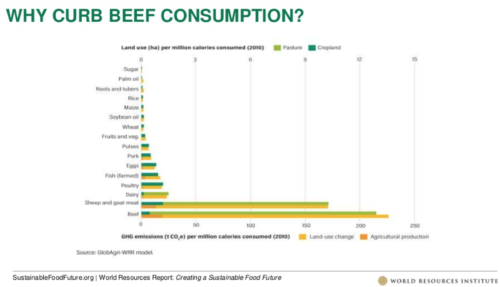 #nowweknow From the piece: Beef, goat and sheep production requires more than 20 times more land and generates more than 20 times more greenhouse gas emissions than pulses, a plant that is in the legume family — dry beans, dry peas, chickpeas, lentils — per gram of protein, according to the report….Beef alone is responsible for 41% of livestock greenhouse gas emissions, and that livestock accounts for 14.5% of total global emissions, according to the UN. That’s more than direct emissions from the transportation sector. In the US, beef only accounts for about 3% of the calories in the average US diet, but it uses 43% of US land used for agriculture, according to the report.
https://www.cnn.com/2019/07/17/health/beef-environment-resources-report/
Breakfast for the champions
#nowweknow that PPS, under the direction of Chef Coby Farrow of NutriServe, is rolling out a new plants-rich framework for school meals, we are excited about power foods at breakfast as well as lunch!
From the piece: Students who start the day with breakfast do better on standardized tests, have fewer behavioral problems in the classroom and miss fewer days of school. When students skip breakfast, even if they are otherwise well-fed, they are more likely to make errors and have trouble recalling details. For students who live in food insecure households, the negative effects of missing breakfast are more pronounced. Over time, undernourished students will see lower grades and standardized test scores and are less likely to succeed in school. The cognitive effects of food insecurity also can translate into disciplinary incidents and mental health issues.
Here’s the link.
New plants-rich menu framework for PPS
There’s big news about school meals at Princeton Public Schools! Here’s an excerpt from the Request for Proposal upon which the new contract is based: “The Princeton Public Schools view their cafeterias as an extension of their classrooms – and of their values. We are looking for a food service management company that shares our commitment to the health and wellness of our students, to the sustainability of our planet, to the provision of quality food for all children regardless of economic means, to partnership with our community, and to food as an entry point to learning. The successful food service management company will manifest these values through fulfillment of the following objectives of our food service program:” and then goes on to list specifics in categories of food quality and choice, education, sustainability and assessment. Here’s the quick version: “Offerings should reflect a globally adventurous and seasonal menu of nutritious, appealing foods, largely consisting of legumes, vegetables, whole grains, seeds, fruits and healthy fats….No processed meats should be served. All milk offerings should be organic…To the extent possible, foods should be fresh and locally sourced within 100 miles…Snacks offered a la carte should exceed the USDA Smart Snack Standards and contain no high fructose corn syrup, no added sugar, no food dyes, no trans fats, and be low in sodium. Examples include fresh or dried fruit, raw vegetables, seeds, popcorn, pretzels, and snacks in which the primary ingredient is a whole grain.”
Here’s the youtube video. Start at 49:02 and go to 1:00:14.
https://youtu.be/FFTyRjN84kA
School meals Request for Proposal
Thrilled to report that the Princeton Public Schools has published its Request for Proposal for its Food Service Management Company.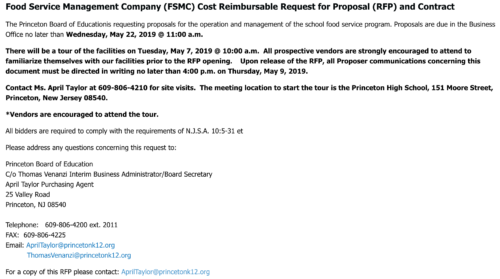
Click through to nutrition facts on school lunches
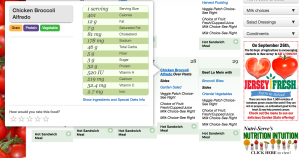
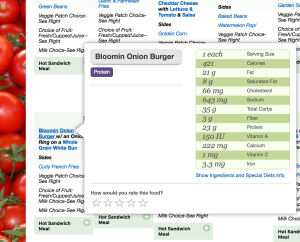 Very cool new feature with PPS school meals: Click through to your child’s menu here, then hover over the specific dish to see basic nutrition information! You can also rate the dish.
Here’s a screen grab of the nutrition information for a Bloomin’ Onion burger that was offered at JW a couple of weeks ago, and also for Chicken Broccoli Alfredo, which was on today’s menu there. Click on either image to visit the PPS menu for John Witherspoon Middle School.
Happy Farm to School week!
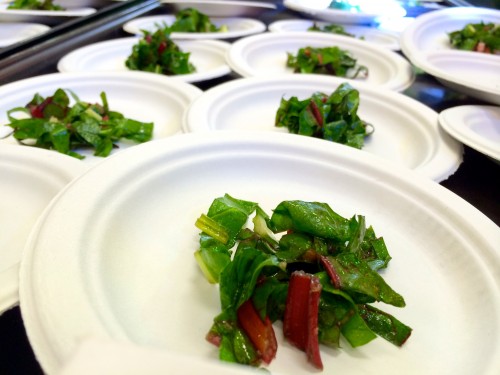
Native berry adds color, surprise to school cafeterias
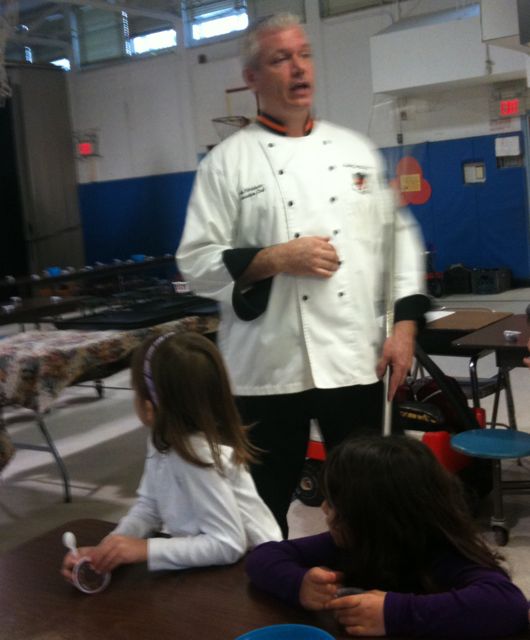
Rob Harbison, chef at Princeton University, introduced elementary students to cranberries three ways for the December tasting – raw, in fresh cranberry sauce, and as sorbet – with apple cider, honey and a bit of sugar syrup – created by Gab Carbone of the bent spoon ice cream in Princeton.
Fresh Cranberry Sauce
- 1 pound cranberries, rinsed and picked over
- 1/4 cup sugar
- 1 cup water
- 1 cinnamon stick
Combine all ingredients. Boil until berries burst. Store in refrigerator
For power to the pupils, put veggies on the plates
The Nutrition Action Healthletter, published by the Center for Science in the Public Interest, ranks vegetables according to nutrient content. Kale led the list, followed by spinach, collard greens, turnip greens, Swiss chard, canned pumpkin, mustard greens, sweet potato, broccoli and carrots. Others among the “superstars” listed were romaine lettuce, red bell pepper, curly endive, brussels sprouts, butternut squash, green pepper, peas and bok choy.