The campus as lab concept comes into its own wherever there is food: the district’s six cafeterias, in its Teaching Kitchens, and in classrooms and on campus lands. The primary focus, however, is each school cafeteria. How does school food – served, cooked, grown, studied – illustrate and amplify curriculum, specifically climate destabilization? What does delicious mean? Does the food on the trays reflect the student population? How do cafeterias support zero hunger? Do they support optimal health and wellbeing? Are hyper-processed foods on the lunch, breakfast, or snack menu? Are sugars replaced with other sweeteners? Do the foods served and grown and used for school meals reflect awareness of climate change and a desire to minimize impact and to reduce wasted food and food waste? Do each school’s Edible Gardens offer snacking opportunity and match the foods that students see on their trays? How do Teaching Kitchens and Edible Gardens work with school meals to support best practices in fueling students’ readiness for learning, and in cultural resonance?
Looking ahead, ideally, school food is a resource free to all students, equivalent to books and lab equipment. In the meantime:
Pomptonian, entering its second year as food service purveyor for Princeton Public Schools, was chosen in part for its emphasis on fresh produce, but it was the company’s anti-hunger platform that may have earned the contract. Those who purchase a school meal are allowed unlimited servings of fruits and vegetables on offer that day. It also earned points with its willingness to embrace the Garden State on Your Plate program, initially agreeing to serve the monthly featured produce item twice a week on the National School Lunch Program hot line – once in a recipe of chef’s choice, and the second, one that reflects a rotating roster of student demographics and cultures.
Goal: Food Service Company every day includes and promotes at least one plants-rich, local and seasonal, minimally processed, low-resource main dish (in addition to a salad with falafel) with “Chef’s Special” signage on the regular National School Lunch Program hot line service and the regular School Breakfast Program service that:
- Acknowledges the classroom of the cafeteria, where all students gather every day, as the most powerful existing and untapped resource on campus, and where five-senses engagement is learning;
- Illustrates and amplifies curriculum, including but not limited to systems thinking, health and wellness, math, science, social studies, life skills, geography, civics, reading, writing, languages, economics/personal finance, art, history, natural systems, and Climate Change Education, specified by the New Jersey Department of Education;
- Is incorporated in daily classroom discussions and student-led interdisciplinary research, and in back-to-school nights, and in ongoing in-person or online conversations/newsletters with parents by the 15th of each month before the next month’s menu is published;
- Features produce grown in the Garden State or highlighted by the NJ Department of Agriculture in its NJ Seasonality Chart;
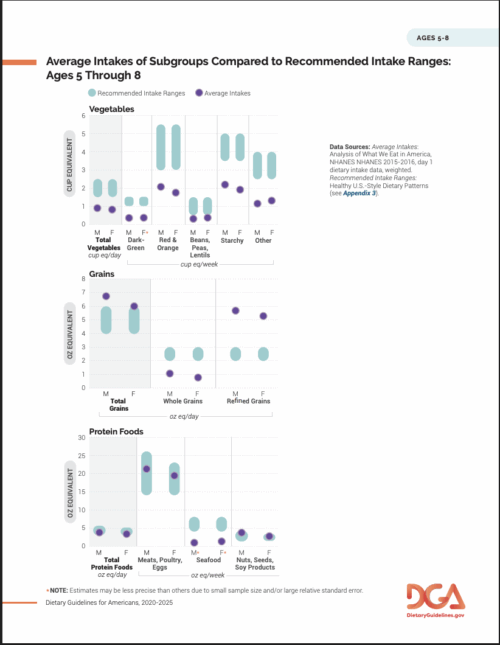
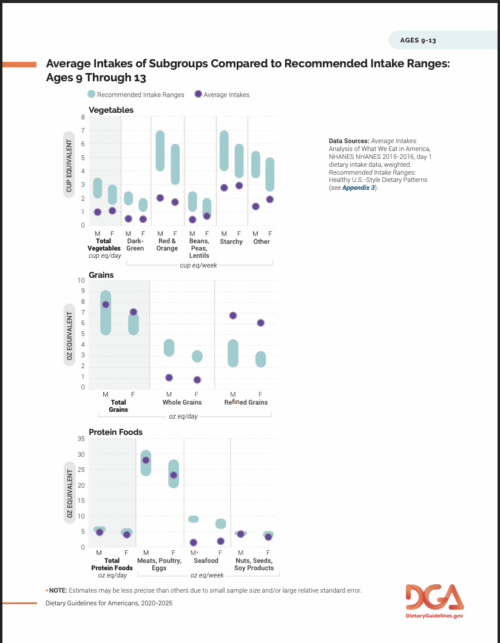
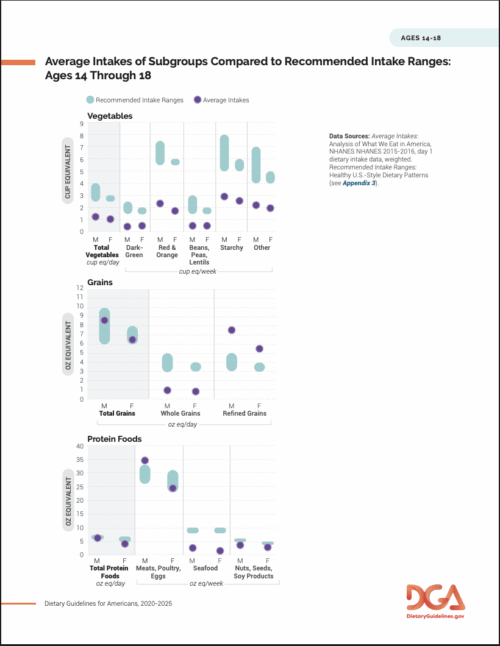
- Promotes food groups that USDA-Dietary Guidelines for America research shows students lack in their diets ages 5-8, ages 9-13, and ages 14-18 (see below);
- Rotates through the week, with each day and its recipe celebrating a global cuisine and its flavors that directly reflect each district’s student demographics, along with seasonality;
- Uses simple and efficient techniques and recipes that the school nutrition team members acquire via existing continuing education requirements of food service providers;
- Promotes “Chef’s Special” with top billing, along with all other plants-rich options available, on every online and printed school menu every day, and is placed in first position on the hot line with plants-rich sides grouped alongside;
- Is prepared in quantities sufficient to serve all students who each day choose at point of service the “Chef’s Special” main dish plus an agreed-upon percentage of surplus for impulse choices, with any extras offered as free tastings or second servings after each daily lunchtime period, and/or donated to local food pantries or other hunger relief organizations; and,
- Is closely monitored for quality control, compliance, weekly data on student choices at each school provided by food nutrition team, and any challenges that members face, by a person appointed by the district’s school board, superintendent, or business manager.